I came to Niseko in August expecting cooler weather, a good hotel and surely a round of golf. Somewhere along the way, the absence of things to do became part of the appeal.
Niseko, in my mind, had always belonged to winter.
I knew it as the place people flew to from Singapore, Hong Kong and Australia in search of powder snow and increasingly elaborate versions of the ski holiday: beautiful chalets, ski-in ski-out hotels, onsens, expensive restaurants and, somewhere among all of that, actual skiing. Its reputation had become so closely tied to winter that I had never really wondered what happened to Niseko when the snow disappeared.
Then an opportunity came up to spend three nights there in August.
I didn’t do very much research before going, which is unusual for me. Perhaps that was because I had already travelled extensively around Japan and had been to Hokkaido in summer before; I knew the familiar images of Biei, Furano, Farm Tomita and Sapporo, while Niseko without snow seemed much harder to picture. Golf was the one obvious answer. Beyond that, I assumed we would stay somewhere beautiful, eat well, enjoy temperatures somewhat kinder than Singapore, Seoul or Tokyo in August, and come home rested.
It wasn’t a particularly ambitious expectation for a trip, but maybe that helped.
A different kind of August
We travelled from Singapore to Seoul and then on to New Chitose Airport, arriving in Hokkaido during what was still unmistakably summer. I had hoped for cooler weather, and Hokkaido delivered, although not quite in the fantasy sense of escaping August altogether. During the day it was warm enough for summer clothes and later, on the golf course, temperatures reached around 27 or 28 degrees. What was missing was the oppressive quality of summer farther south — the kind of heat in Singapore or Seoul that makes simply being outdoors feel like an activity in itself. By evening, the air changed quickly enough that I wanted a light jacket.
Lake Shikotsu was already part of our drive to Niseko, although I had paid so little attention to the itinerary beforehand that I had no particular expectation of it. In my mind it was simply a stop along the way, somewhere to get out of the car and walk before continuing to the hotel.
That indifference probably made the first sight of it more affecting.
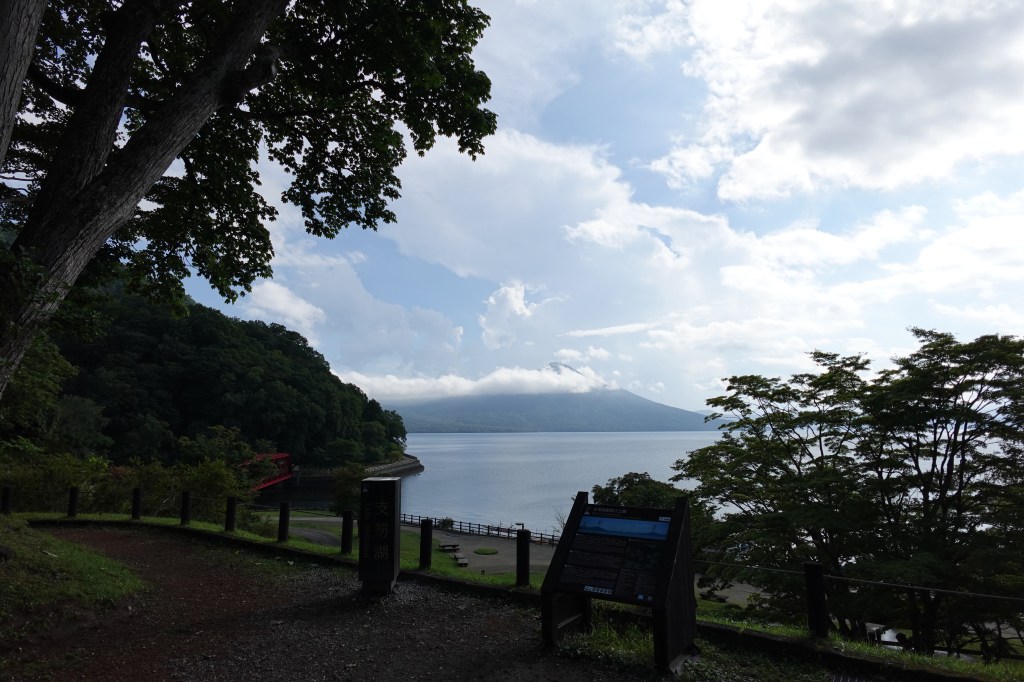
Lake Shikotsu sits inside Shikotsu-Toya National Park, in a volcanic landscape shaped by calderas and mountains, and at 363 metres it is Japan’s second-deepest lake. Its water is known for exceptional clarity, helped by the lake’s depth and relatively low levels of nutrients and plankton.
Those were facts I learned afterwards. Standing there, what registered was much simpler: an enormous stretch of blue-grey water, intensely green forest and mountains rising beyond the opposite shore, partly hidden by clouds. Near the bridge the water became almost translucent, shifting between blue and green depending on the light.
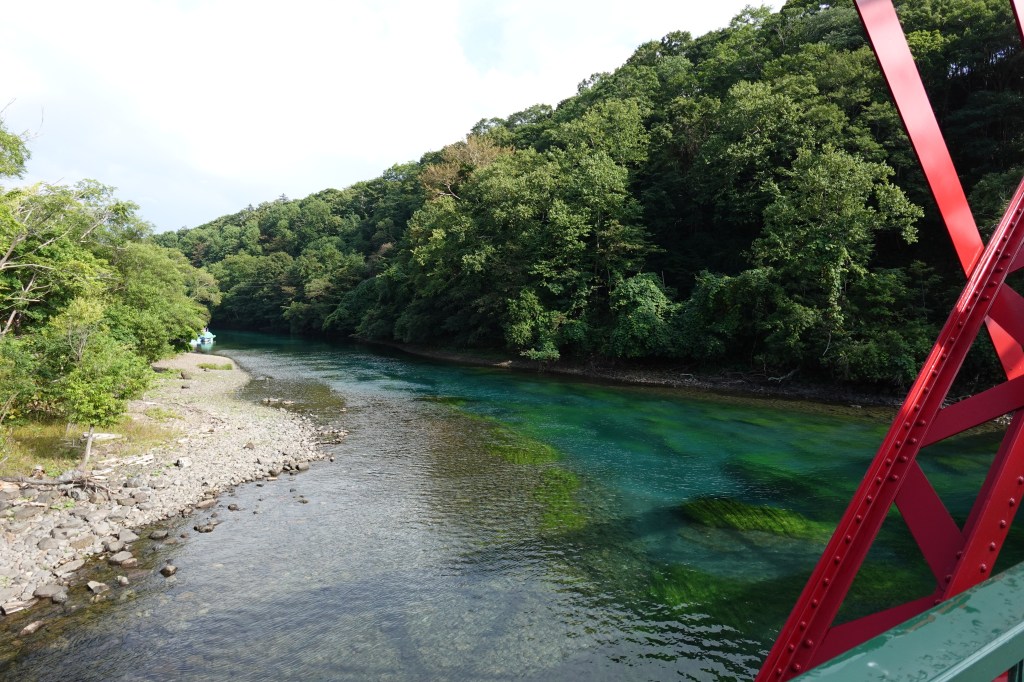
We spent perhaps half an hour there, walking slowly enough that it was the first moment since leaving Singapore when I felt I had properly arrived somewhere. Nothing demanded our attention; there was no monument to inspect or famous photograph to reproduce, and the landscape seemed entirely indifferent to whether we stayed for ten minutes or three hours. Yet there was something about its scale and stillness that quietly recalibrated the pace of the day.
It was my first hint that the most memorable part of this trip might not be what there was to do in Niseko, but what being there made me stop doing.
A luxury ski town without the skiing
Another thirty or forty minutes in the car brought us closer to Niseko, and the landscape began producing a slightly surreal contradiction. For long stretches there was countryside, open land and mountains, and then suddenly an expensive-looking apartment building or a beautifully designed hotel would appear. There was even a Moncler store, which felt almost comically polished against the rural landscape surrounding it.
I had expected Niseko’s international reputation to correspond to a larger and more obviously luxurious resort town. Instead, in summer, it felt as though the luxury had been scattered across the countryside rather than assembled into a town. There were beautiful buildings and ski infrastructure, but also enormous parking areas and undeveloped gaps between them; you could sense how different the same place must feel once all of that space is filled with snow and people carrying skis.
It was somehow both very international and very rural, a place where something clearly significant was happening but where, particularly in August, there could also appear to be almost nothing happening at all.
MUWA Niseko, where we stayed for three nights, captures that contradiction rather well.
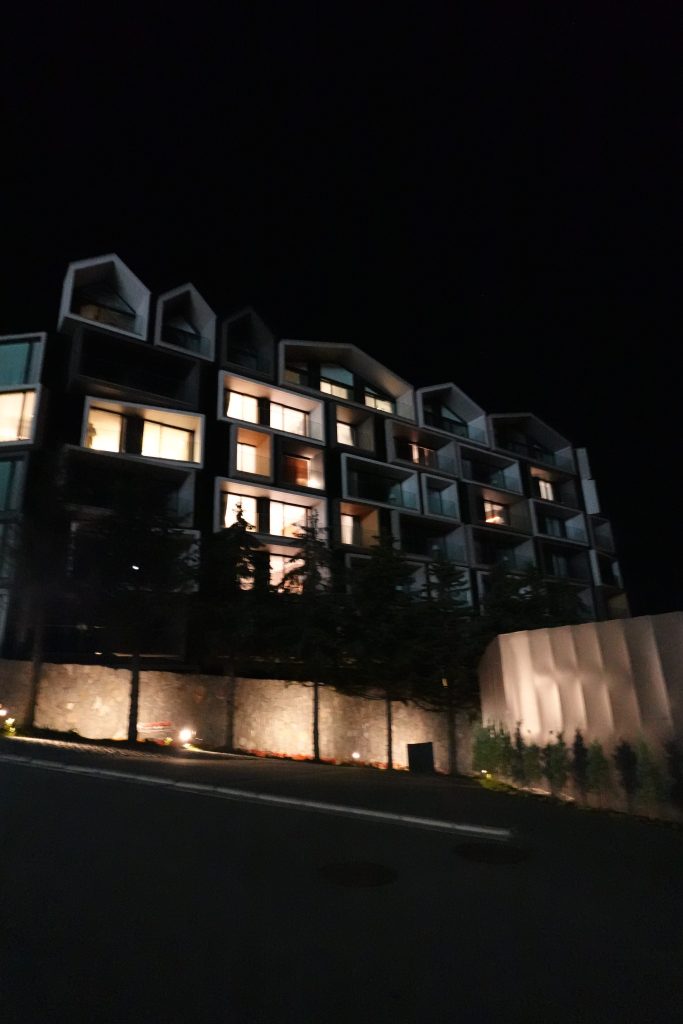
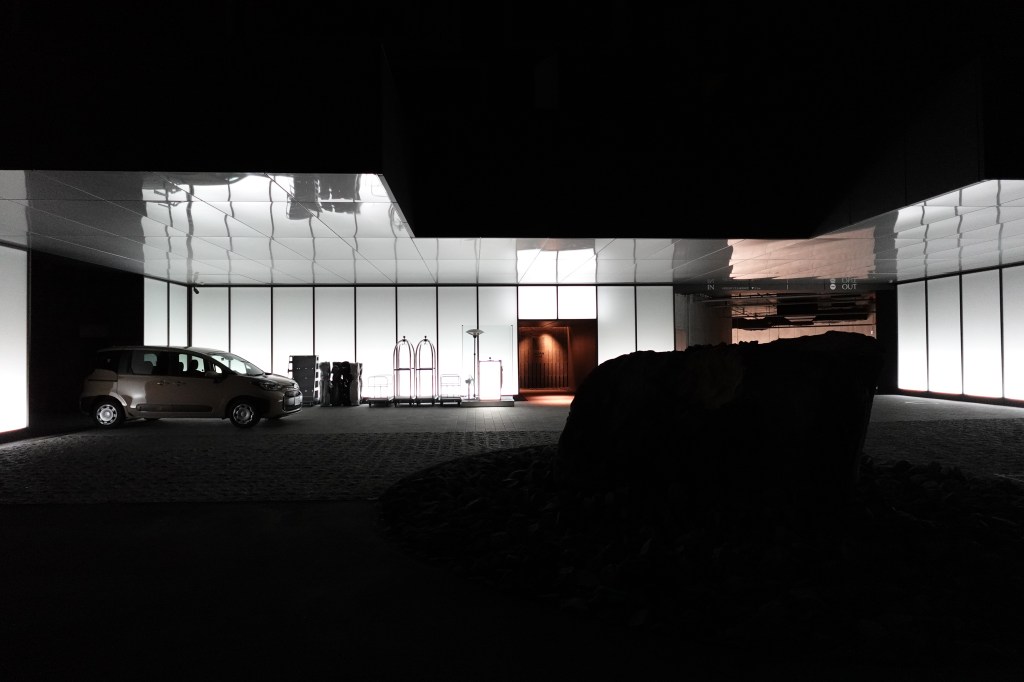
Opened in late 2023 in Grand Hirafu, MUWA occupies one of those locations whose value becomes immediately obvious when you imagine it under several metres of snow: it sits directly at the ski slopes, with ski-in, ski-out access in winter. The property has 113 rooms and residences and was designed very deliberately around the landscape and the mountain experience.
In August, without the snow or skiers, its surroundings initially felt a little exposed. I remember arriving and thinking that the emptiness was almost peculiar for a hotel of this calibre, although much of that impression came from seeing infrastructure designed for a completely different season.
Inside, the mood changed.
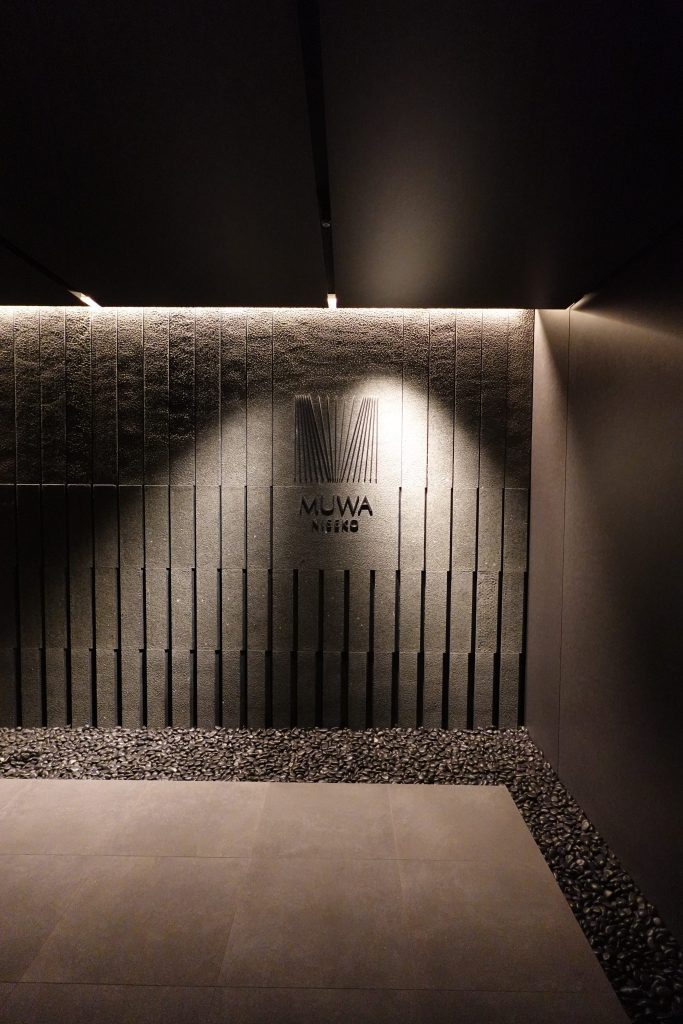
MUWA is dark and restrained rather than conventionally glamorous. Stone, timber, shadow and warm light do most of the work, and the interiors have enough Japanese reference to feel grounded in place without slipping into the decorative clichés of a Japanese-themed hotel. It felt polished but remarkably calm, and everything — the rooms, amenities and public spaces — seemed designed around the assumption that guests had come to spend several days there rather than simply sleep between excursions.
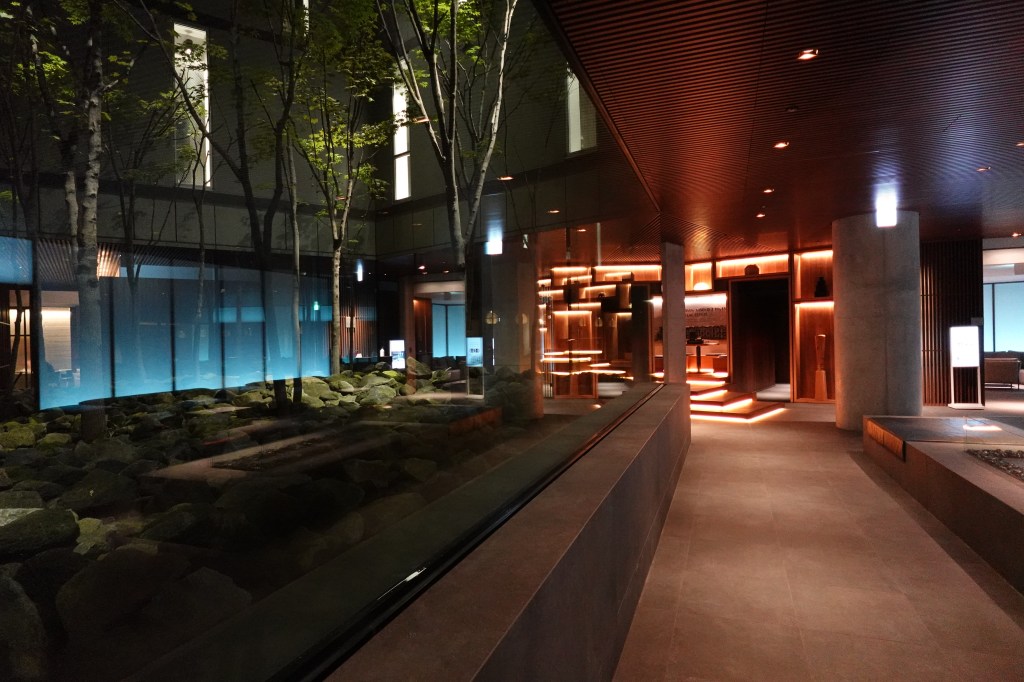
It wasn’t empty either. There appeared to be a cycling event taking place during our stay, and breakfast in particular could be surprisingly busy, which was my first indication that Niseko’s green season has a life of its own even if it doesn’t have the theatrical intensity of winter.
I’ll write about MUWA separately, because the hotel deserves a proper review of its own. For this trip, what mattered most was that it made doing very little feel completely acceptable.
The first evening
By the time we had checked in, the day was nearly over, and dinner was sukiyaki at the resort.
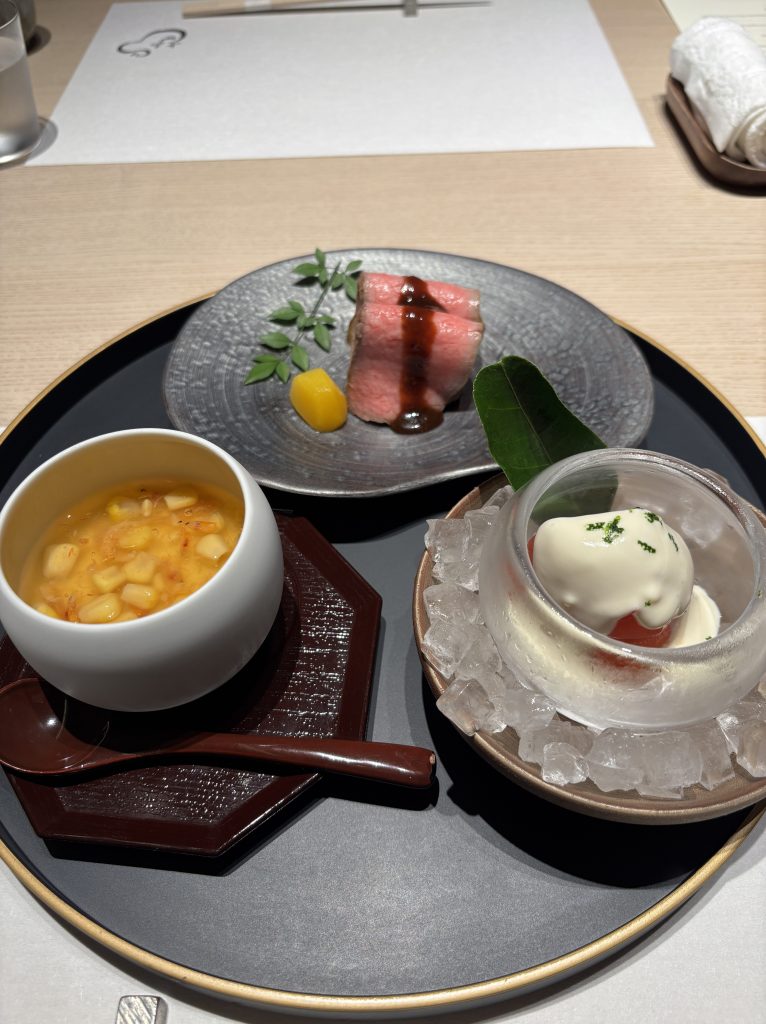
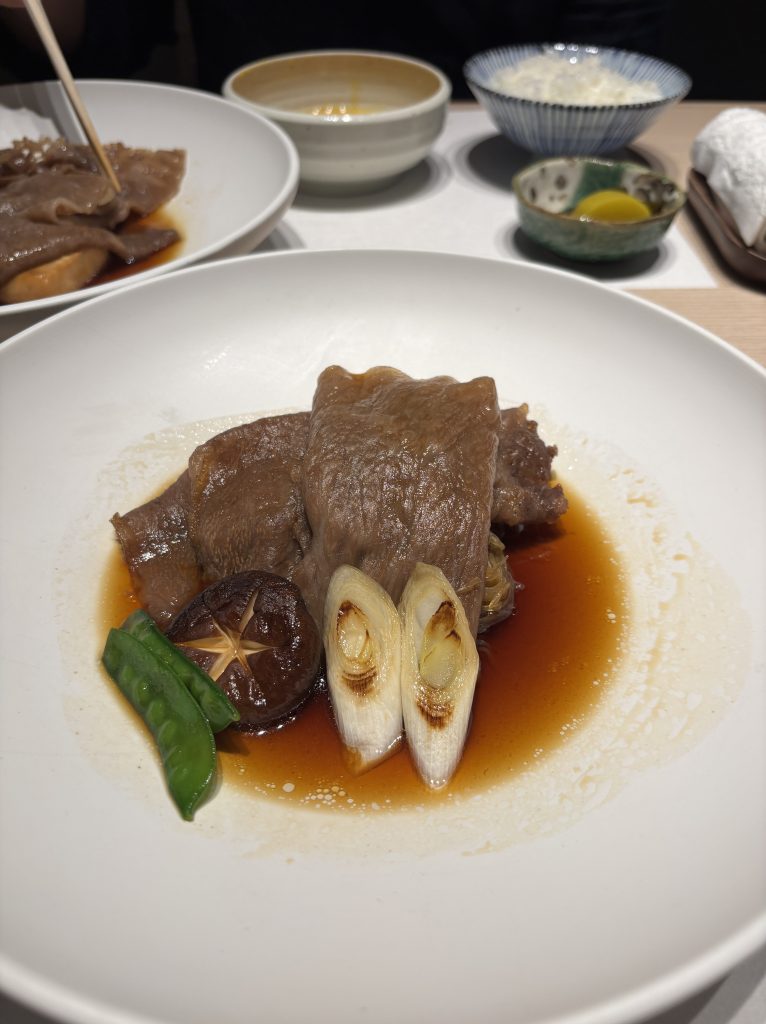
After two flights and several hours on the road, it was almost absurdly satisfying: warm, generous, deeply savoury and exactly Japanese enough to make me feel that the trip had properly begun. Hokkaido is one of those places where food quickly becomes inseparable from the experience of travelling, although at that point I hadn’t yet realised quite how much the ingredients themselves would become one of the stories of the trip.
After dinner I went to the onsen.
I love Japanese onsen and usually gravitate immediately towards rotenburo, the outdoor baths where cold air and hot water make even doing absolutely nothing feel purposeful. MUWA’s onsen was indoors, so I had mentally downgraded it before I even entered.
Instead, it became one of my favourite spaces in the hotel.
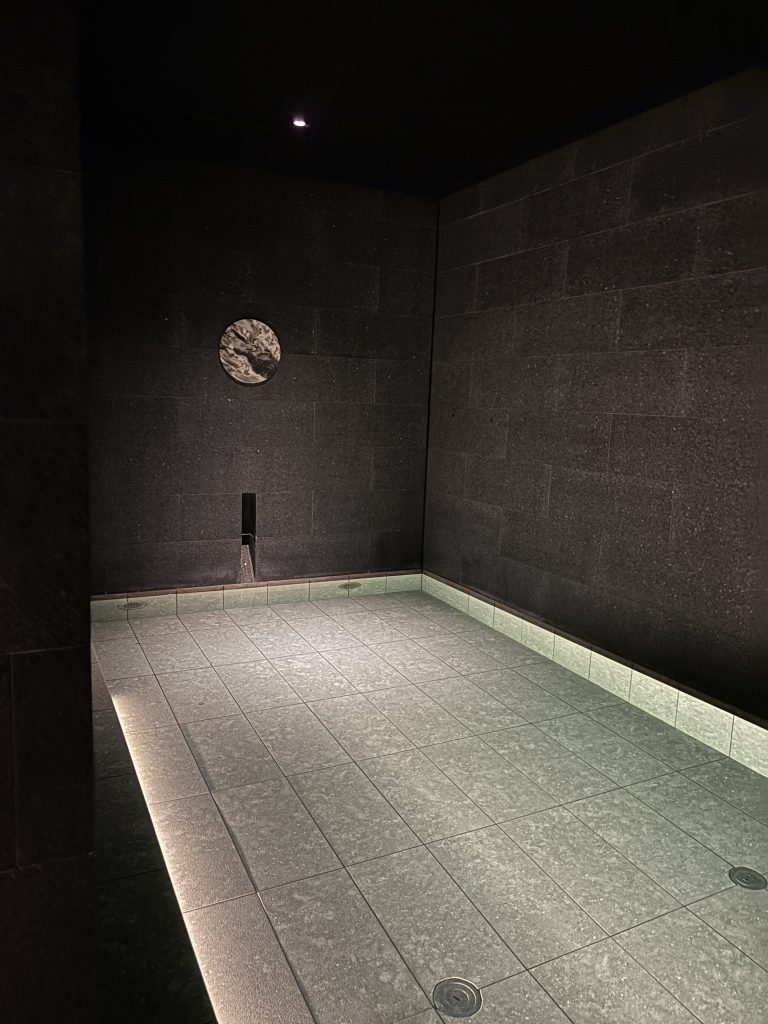
The bath is almost severe in its simplicity: dark stone, low lighting, water and very little else. A circular artwork on the wall looked, in the dimness, like a moon suspended over the bath, and the entire room had the feeling of bathing outside on an unusually still night. It didn’t try to compensate for being indoors with decoration or spectacle; it simply created enough darkness and quiet that the absence of a view stopped mattering.
After Singapore, Seoul, two flights and the drive across Hokkaido, hot water and near silence were enough. We went to bed early because the next morning was the part of the trip I had actually been looking forward to.
Golf was supposed to be the highlight
If you had asked me before arriving what I expected to enjoy most in Niseko, I would have said golf without hesitation.
We played at Hanazono Golf, an 18-hole course set through the forests and foothills of the Niseko area. The course opened in 1992 and was designed by Chohei Miyazawa; at just over 7,000 yards from the back tees, it has enough length and elevation change that the landscape is never merely decorative. The course moves through natural birch forest, with streams and changes in terrain particularly shaping the back nine.
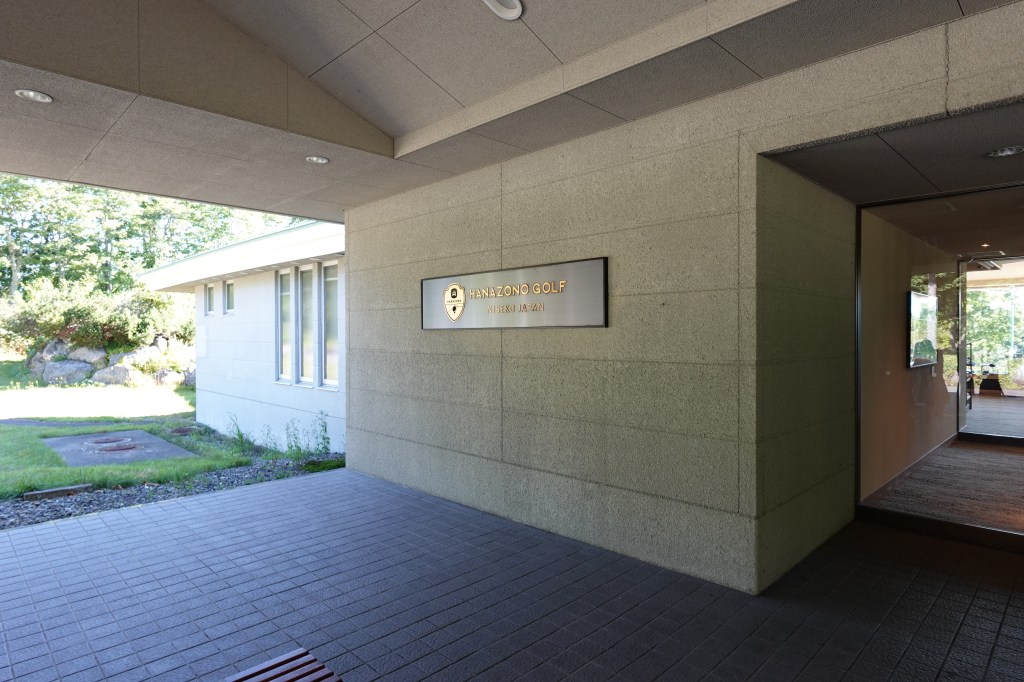
It was beautiful almost immediately.
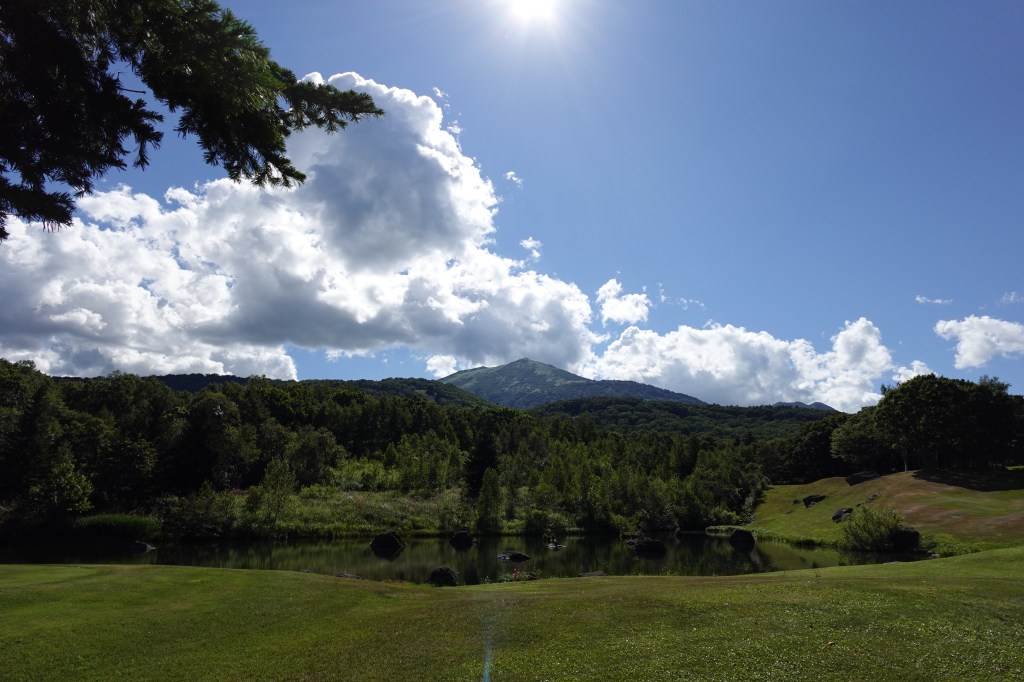
I’ve played enough golf to know that a beautiful course doesn’t automatically make for a memorable round, but Hanazono reminded me of what I find so seductive about playing golf in Japan. The course wasn’t easy — there was plenty of distance and enough variation to keep me occupied — yet there was something extraordinarily leisurely about moving through it. Mountains and forest surrounded the fairways, and Mount Yotei seemed to appear and disappear throughout the round, sometimes obvious in the distance and sometimes unexpectedly framed between trees as we moved to the next hole.
There is a form of luxury Japan does particularly well that has relatively little to do with extravagance. It is the luxury of maintained space, of time being allowed to unfold slowly inside a beautiful environment, of nobody seeming particularly interested in rushing you towards the next thing. Golf happens to be an ideal vehicle for it.
The weather helped enormously. It was around 27 or 28 degrees, warm enough that there was no question we were playing in August but never so oppressive that the heat became the defining feature of the day. We drank cold water and Pocari Sweat, moved slowly through the course and probably looked at the mountains more often than we looked at our scores.
By the end I was pleasantly tired rather than depleted.
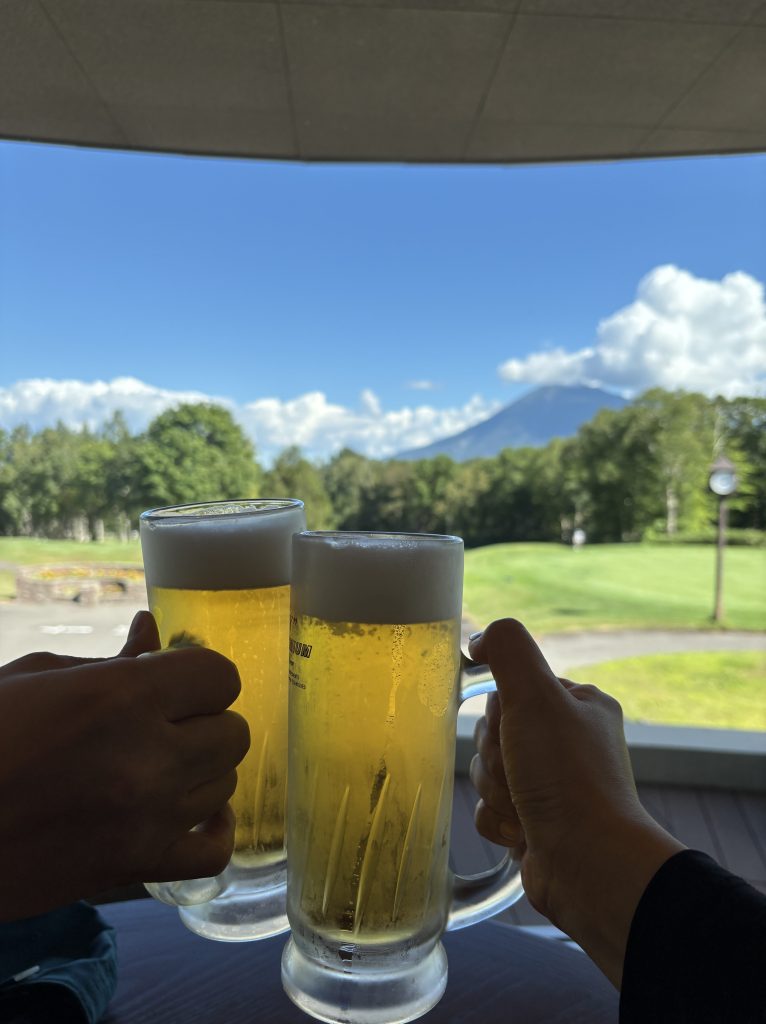
Then came a cold beer and soup curry.
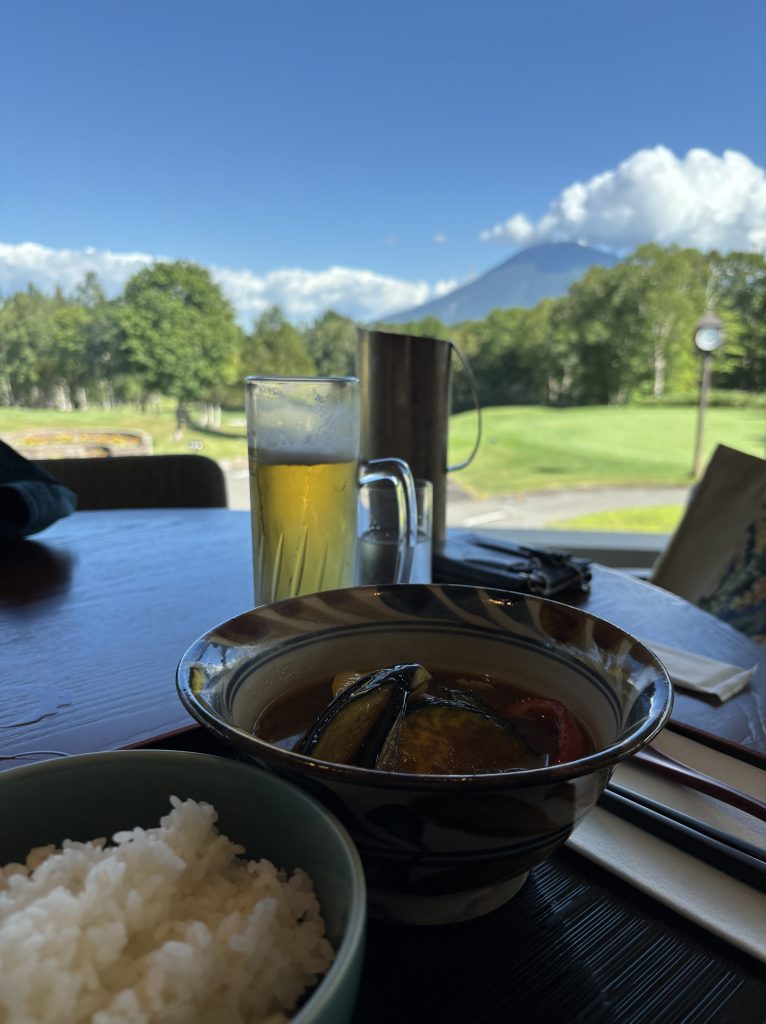
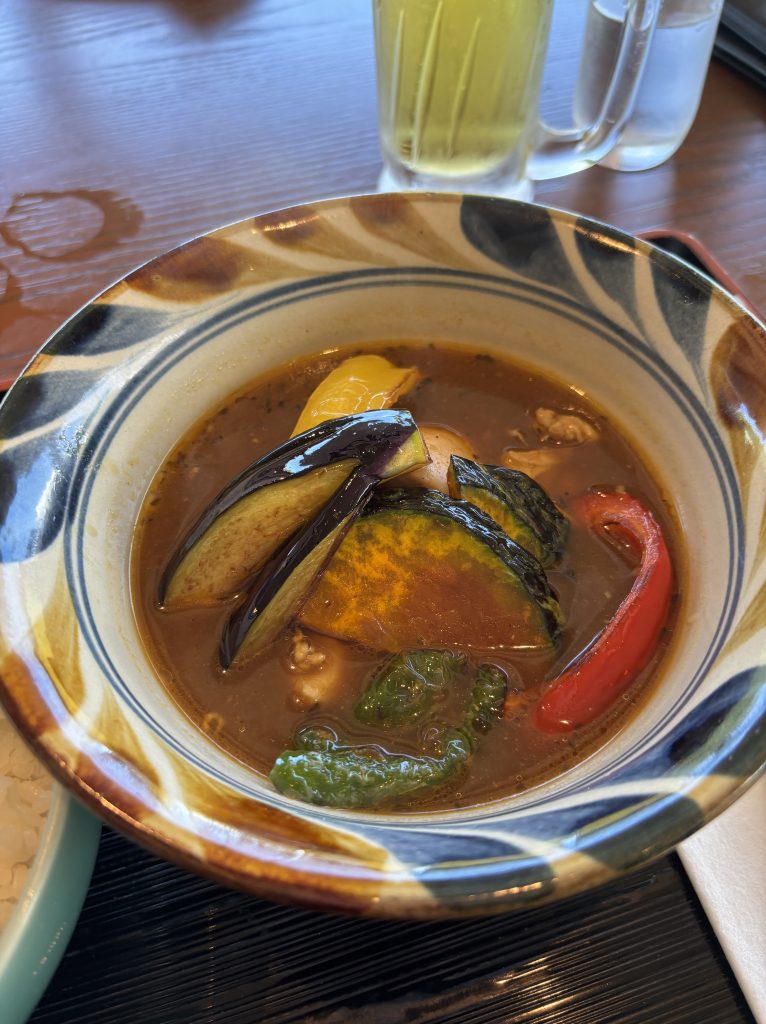
It is difficult to improve upon cold beer after several hours of summer golf, but Hokkaido soup curry comes surprisingly close. Unlike the thicker Japanese curry most people know, soup curry is exactly what the name suggests: a thinner, deeply flavoured broth usually filled with large pieces of vegetables and meat, a style that developed in Sapporo and became one of Hokkaido’s distinctive comfort foods.
I ate it three times during this trip.
That probably says more than a detailed restaurant review could.
Somewhere along the way, I actually started resting
What surprised me by the end of that second day was that none of the individual ingredients of the experience should have surprised me very much.
Of course a good golf course is enjoyable. Of course Hokkaido in August is more pleasant than Singapore. A newly built luxury resort should be comfortable, and eating well in Japan hardly qualifies as an unexpected discovery.
Yet somewhere between Lake Shikotsu, the onsen, several hours on a golf course and a bowl of soup curry, I had begun to feel genuinely rested in a way I hadn’t anticipated.
I had assumed that coming to Niseko in summer would amount to a rather pleasant version of doing very little. What I hadn’t understood was that doing very little might actually be the point.
There seemed to be an unusual amount of room around everything here: around the buildings, around the roads, around the mountains and even around the hours of the day. Perhaps because I didn’t have a long list of famous places I felt obligated to see, I wasn’t constantly measuring the trip against an itinerary. I wasn’t wondering whether we had used the afternoon efficiently enough or whether there was another attraction twenty minutes away that we ought to squeeze in before dinner.
For someone who travels frequently and has already visited many of Japan’s better-known destinations, the absence of that pressure was unexpectedly luxurious.
It wasn’t simply that Niseko was peaceful. Plenty of places are peaceful.
It was that the place seemed to give permission to leave some time unused.
Hokkaido on the plate
That evening we ate at MUWA again, this time a Western-style course dinner built largely around Hokkaido ingredients.
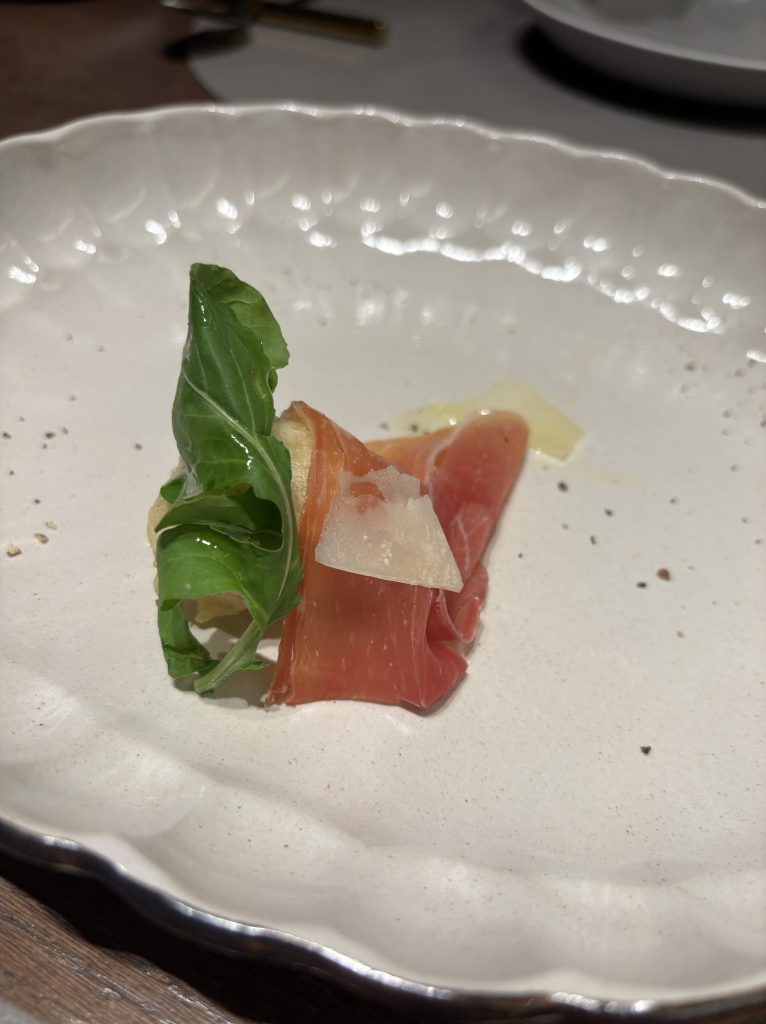
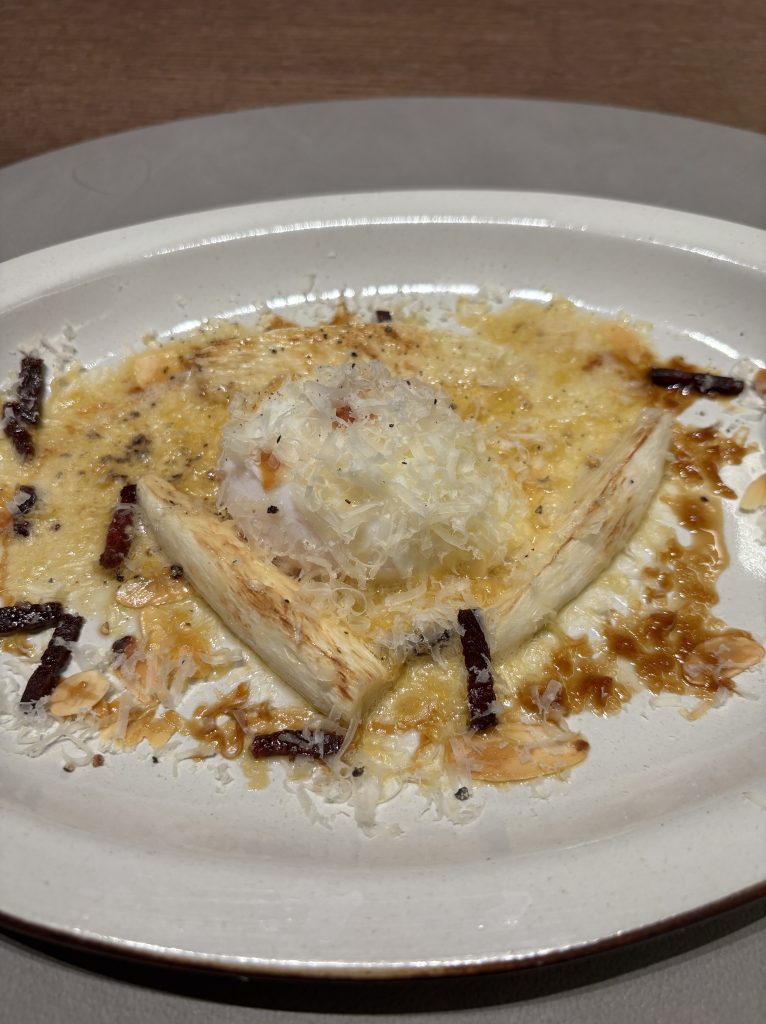
By then I had begun noticing something about eating here that would become much more obvious on our final day: good food in Hokkaido often seems remarkably confident about leaving its ingredients alone.
That doesn’t mean the cooking is simplistic. The meal was technically polished and clearly designed as a proper course dinner, but there was restraint in the way the ingredients were handled. Vegetables still tasted distinctly of themselves, beef was allowed to remain recognisably beef, and the food felt local without being rustic or performatively regional.
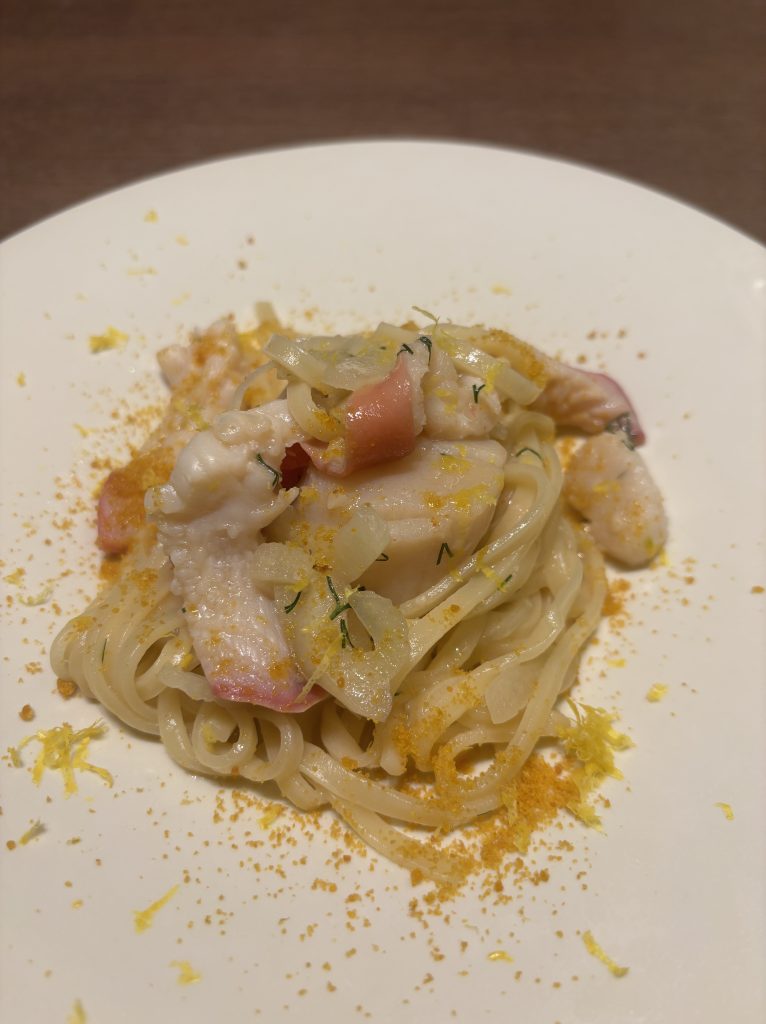
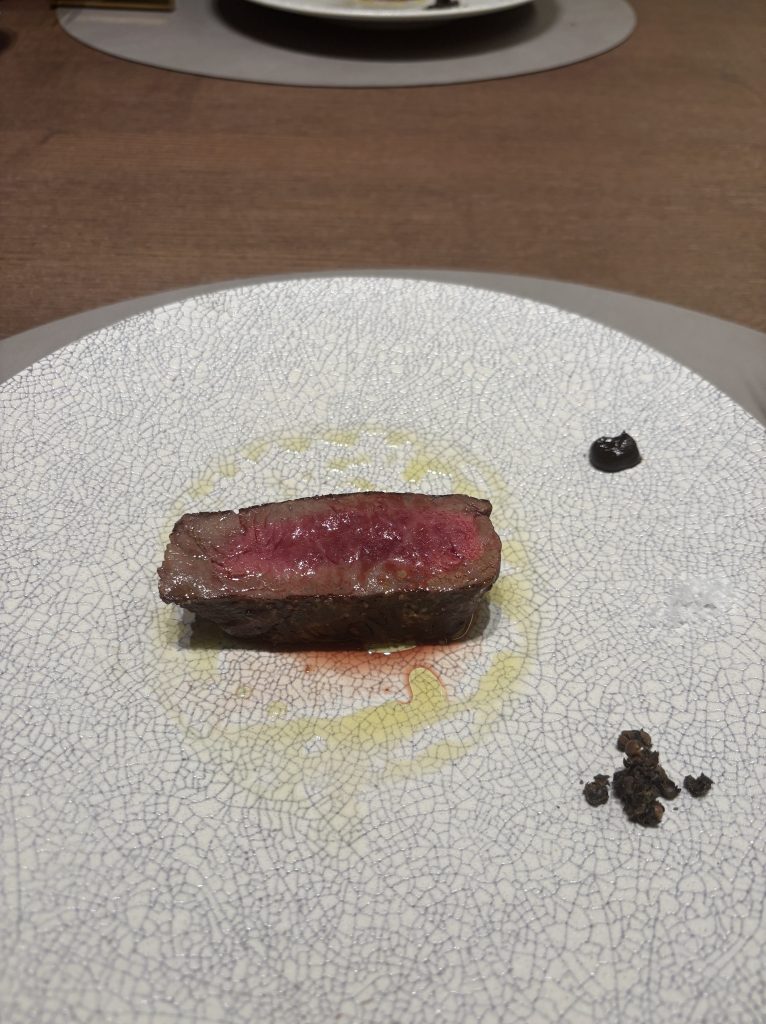
Hokkaido has an unusual abundance of things that chefs elsewhere often have to work hard to source — dairy, beef, seafood, potatoes, corn and an extraordinary range of vegetables — and perhaps abundance creates a certain confidence. When the raw material is that good, the chef doesn’t always need to announce his presence quite so loudly.
That dinner felt like an elegant version of the same thing I had begun sensing everywhere else in Niseko: enough, but not too much.
If the trip had ended here, I would already have been satisfied
By the end of our second night, I thought I understood what a summer trip to Niseko was.
We had driven through one of Hokkaido’s great volcanic landscapes, stayed in an exceptionally comfortable hotel, eaten well, soaked in hot water, played a beautiful round of golf and spent two days in weather that made being outdoors pleasurable again.
If someone had only three or four days and wanted a sophisticated but uncomplicated escape — cooler air, good food, golf, an onsen and a beautiful hotel — I could already have recommended exactly this trip without hesitation.
And perhaps that is the most straightforward answer to the question I had before arriving: what do you actually do in Niseko in summer?
You don’t necessarily need to do very much.
You play golf, eat extraordinarily well, drive through landscapes that make you slow down without consciously deciding to, soak in hot water and sleep with cool air outside the window. Gradually, the urge to fill every hour begins to disappear.
I thought that was what I had come to Niseko to discover.
It turned out I was only halfway through the trip.
The final day would take us away from the polished resorts and golf courses and into a version of Hokkaido I hadn’t expected at all — and, in the process, change what I thought this trip had been about.
Part II to come.


Leave a comment