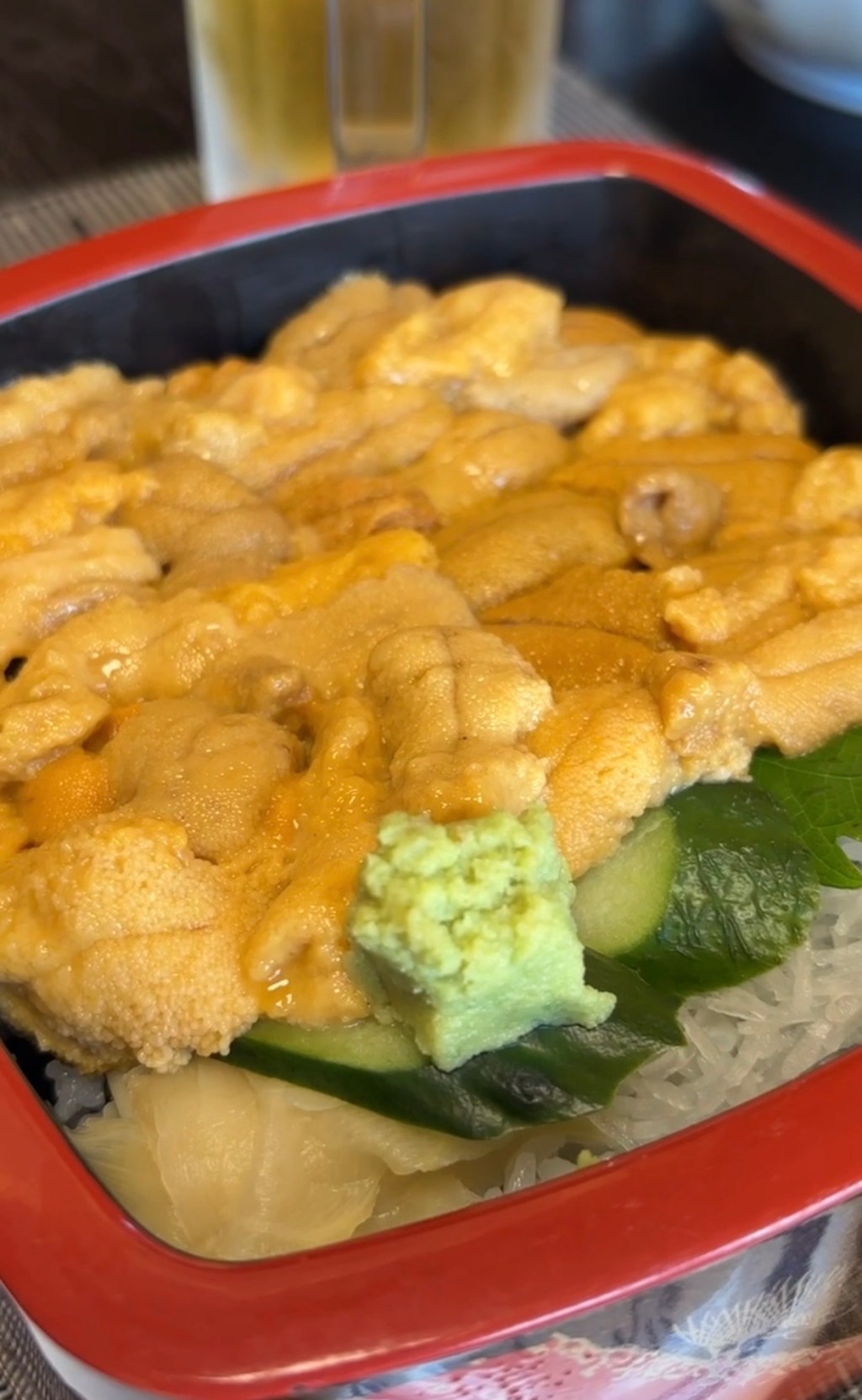
I had eaten sea urchin often enough to know that I was supposed to find it exquisite. It took a small restaurant on the coast of Hokkaido to understand why.
I had eaten uni often enough to know what I was supposed to think of it. In good Japanese restaurants it sometimes arrived in a small wooden box, each golden lobe arranged with such care that the presentation itself seemed to be telling you that this was not merely seafood but something precious, to be handled sparingly and appreciated with concentration. At sushi counters, chefs placed it carefully over rice or wrapped it in crisp nori, while people who knew far more about Japanese food than I did spoke about sweetness, creaminess and the taste of the sea with the particular enthusiasm usually reserved for ingredients whose pleasures are assumed to be self-evident.
I never quite understood it.
I could eat uni, certainly, and over the years I had enough opportunities to try versions that were presumably very good, but the experience never seemed to justify the reverence surrounding it. Its yielding, almost custard-like texture felt oddly foreign to me, particularly when served cold, and the marine flavour could seem richer than I wanted it to be. Other people tasted delicacy; I was mostly conscious of something soft, cold and faintly strange dissolving on my tongue.
I eventually concluded that uni belonged to the same category as a number of expensive foods whose cultural significance I could understand more easily than their taste. Perhaps I simply wasn’t a uni person.
Then I went to Hokkaido.
What are we actually eating when we eat uni?
The first surprise, once I began looking into it, was how poorly the English word roe describes what we casually call uni. The edible orange or yellow lobes inside a sea urchin are its gonads — reproductive organs, specifically ovaries or testes — rather than eggs in the conventional sense. Their colour, firmness, sweetness and bitterness vary according to species, sex, maturity, season, diet and what happens to the uni after it leaves the sea.
That variability helps explain something I had never appreciated before: uni is not one flavour.
Food chemistry gives us part of the explanation for the taste people find so compelling. Research on sea-urchin gonads has identified glycine and alanine among the amino acids associated with sweetness, while glutamic acid contributes umami; other amino acids, including arginine and valine, can contribute bitterness and complexity. The balance changes with maturation and other biological factors, which means two pieces of uni that look superficially similar can produce remarkably different experiences.
This also begins to explain why chefs are so interested in it. In a study examining how experienced and Michelin-starred chefs perceived sea urchin, sweetness, freshness, colour, texture and appearance were among the characteristics used to evaluate its quality; the attraction wasn’t simply rarity or price, but an unusually distinctive sensory ingredient whose quality could vary dramatically.
Uni occupies an interesting space between several tastes and textures at once. At its best there is sweetness, but not dessert sweetness; salinity, without the aggressive saltiness of preserved seafood; and umami that lingers after the uni itself has disappeared. Its texture is rich enough to resemble something dairy-like, yet there is no fat-heavy finish in the way there might be with cream or butter. It tastes unmistakably of the sea without, ideally, tasting fishy.
That last distinction turned out to matter enormously to me.
Perhaps what I had disliked wasn’t uni itself so much as mediocre uni.
Hokkaido changes the equation
Hokkaido’s reputation for sea urchin isn’t simply another piece of regional food mythology. Two important edible species are harvested around the island: Kita-murasaki uni, generally paler, and Ezo-bafun uni, whose edible lobes are characteristically vivid orange. Around Shakotan, Hokkaido’s official tourism authority describes Kita-murasaki as the more commonly harvested variety, alongside the richer-coloured Ezo-bafun.
Yet species is only part of the story.
Sea urchins eat marine vegetation, including kelp, and diet can materially affect the quality of the gonads. Hokkaido’s own fisheries information explicitly connects good kombu with exceptional uni, while experimental research has shown that feeding sea urchins Saccharina japonica can increase alanine and glutamic acid — compounds associated with sweetness and umami — while reducing bitter-tasting amino acids.
In other words, the romantic explanation that Hokkaido uni tastes extraordinary because the urchins are eating extraordinary kelp isn’t entirely romantic.
There is chemistry underneath it.
The other luxury is season.
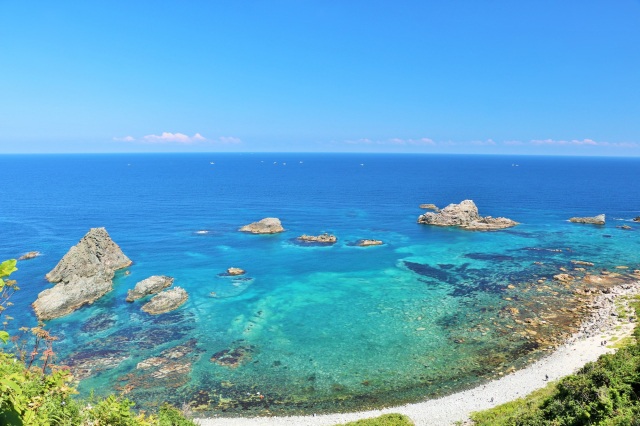
On the Shakotan Peninsula, west of where we were staying in Niseko, fresh local uni is particularly associated with the short period from June through August. Hokkaido’s official tourism site describes those months as the season when visitors come specifically for uni, and notes that Kita-murasaki is the more commonly harvested variety around Shakotan, alongside Ezo-bafun. Hokkaido government fisheries data places the harvest period for both species in the Shiribeshi region broadly between May and August.
I was there in late August.
Without really understanding it at the time, I had arrived at the closing edge of precisely the season in which I should have been eating uni.
The uni in Furubira
On our final full day in Niseko, we drove west toward the Shakotan Peninsula and stopped for lunch in Furubira, a small coastal town that felt almost entirely removed from the international resort culture we had left behind that morning.
The restaurant was not the kind of place where uni arrived ceremoniously in a wooden box. There were no tourists photographing a chef across a counter and no elaborate explanation of provenance before each course. The room was overwhelmingly Japanese and felt like somewhere people in the area simply came to eat.
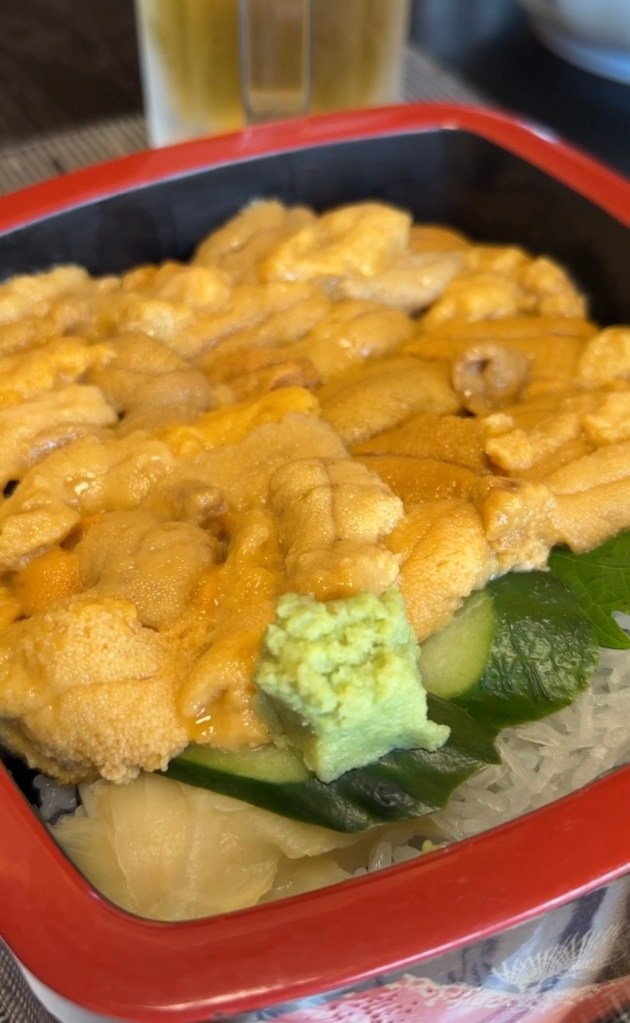
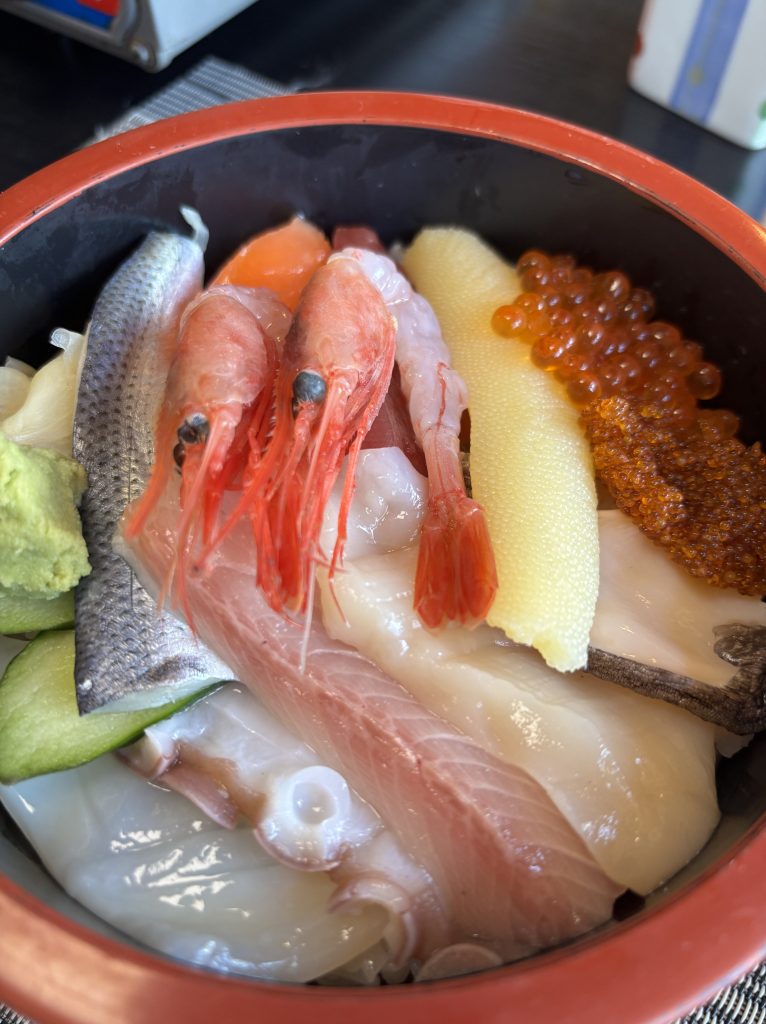
We ordered a chirashi bowl and a white-miso nabe, and uni appeared generously in both.
I can’t responsibly tell you exactly which species I ate that afternoon. The Shakotan region harvests both Kita-murasaki and Ezo-bafun during that season, with Kita-murasaki being the more common local variety, but without the restaurant’s sourcing record or a species-labelled menu I would rather leave the identification open than turn the colour of a photograph into certainty.
What I can describe with much greater confidence is what it tasted like.
The first thing I noticed was what wasn’t there.
There was none of the fishiness I had learned to tolerate in uni, nor the slightly metallic or bitter finish that sometimes made its richness feel tiring. The texture was still unmistakably uni — soft, yielding and almost custard-like — but instead of registering as cold and mushy, it seemed to melt before I had quite finished understanding the bite.
Then the flavour opened.
There was an initial sweetness that was subtle enough to be difficult to separate from the texture, followed by something much deeper and more savoury, a long marine umami that seemed to expand after the uni itself had disappeared. It tasted of the sea in the way that the smell of clean ocean air does: saline and mineral, but not remotely fishy.
Most surprising was the finish. The flavour stayed.
Not heavily, and not with the fatty coating I associate with very rich foods, but as a gentle savouriness that made the next bite seem almost inevitable.
For the first time in my life, I understood why people paused over uni.
And then we cooked it
The nabe made the experience stranger still.
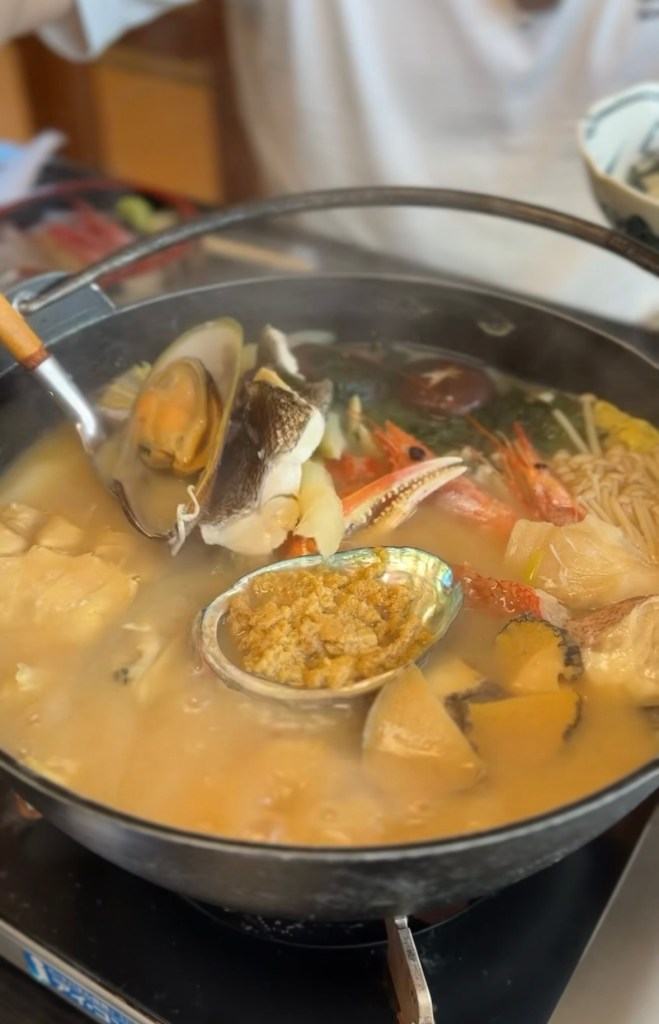
I had always thought of good uni as something whose value depended on serving it raw and handling it as little as possible, yet here it was disappearing into a hot white-miso broth. As it warmed and softened, the uni lost some of its distinct physical form but seemed to give the broth another layer of depth, adding richness without turning it heavy.
Raw and cooked, it was recognisably the same ingredient but expressed differently. One gave me that almost impossible combination of cool creaminess and ocean; the other showed me why a chef might value uni less as a luxury garnish than as an ingredient capable of altering everything around it.
That was when the comparison that had been bothering me finally became obvious.
Uni reminded me of truffles.
Not because they taste remotely alike, but because both can be extraordinarily difficult to understand through an inferior version. If your first encounters with truffle are mainly truffle oil, the obsession surrounding a fresh white truffle can seem almost absurd; similarly, mediocre uni can leave you wondering why anyone would pay so much for a cold orange spoonful of something vaguely marine.
Then, under the right circumstances, you taste the version that explains the category.
Durian can work that way too. Some foods don’t gradually persuade you. They wait for the right place, the right season and the right specimen, and then your understanding of them changes almost embarrassingly quickly.
Hokkaido was that moment for me.
Why can bad uni be so bad?
Once I had experienced the difference, I wanted to understand why the gap could be so wide.
Part of the answer lies in the ingredient’s extraordinary sensitivity. Commercially desirable uni is judged not only by flavour but by colour, shape, firmness and intactness, all qualities that become more difficult to preserve once the sea urchin is opened. Scientific work on sea-urchin quality has found that sex, diet and storage conditions can all influence sensory characteristics, while freshness-related chemical changes continue after harvest.
Then there is processing.
Anyone who has seen pristine rows of uni in a wooden tray has probably encountered the reason preservation matters. Uni is delicate enough that processors have traditionally used treatments including alum to help the lobes retain their structure during distribution. At the other end of the spectrum are products known as ensui uni, in which freshly harvested lobes are packed in sterilised seawater.
Hokkaido’s own fisheries listings provide examples of this approach. One Kita-murasaki product from Rebun is packed using only sterilised seawater, with no colouring or other additives, and shipped on the day of harvest; Hokkaido also lists Ezo-bafun products marketed specifically as alum-free or packed in sterilised seawater.

Suddenly the wooden box I had always associated with luxury looked slightly different to me.
It wasn’t necessarily proof that the uni inside was better.
With an ingredient this fragile, proximity to the sea can be a luxury of its own.
The luxury of being there
This may be what I misunderstood about Hokkaido uni before I ate it.
I thought its value was mostly scarcity translated into status: an expensive ingredient served in expensive restaurants, coveted partly because people who care about food had collectively agreed that it should be coveted.
There is certainly some of that. Luxury foods accumulate ritual around themselves, and ritual has a way of turning price into desirability.
But the best uni is also unusually resistant to abstraction.
Where it lived matters. What it ate matters. When it was harvested matters. How mature it was matters. How quickly it reached the person eating it matters. Even within Hokkaido, the character can change with species and coast, and the season opens and closes whether or not someone in Singapore or New York would like another uni tasting menu.
That makes it almost the opposite of a globally standardised luxury product.
A handbag can be made in one place and remain essentially itself wherever it travels. A great piece of uni is already changing by the time it begins the journey.
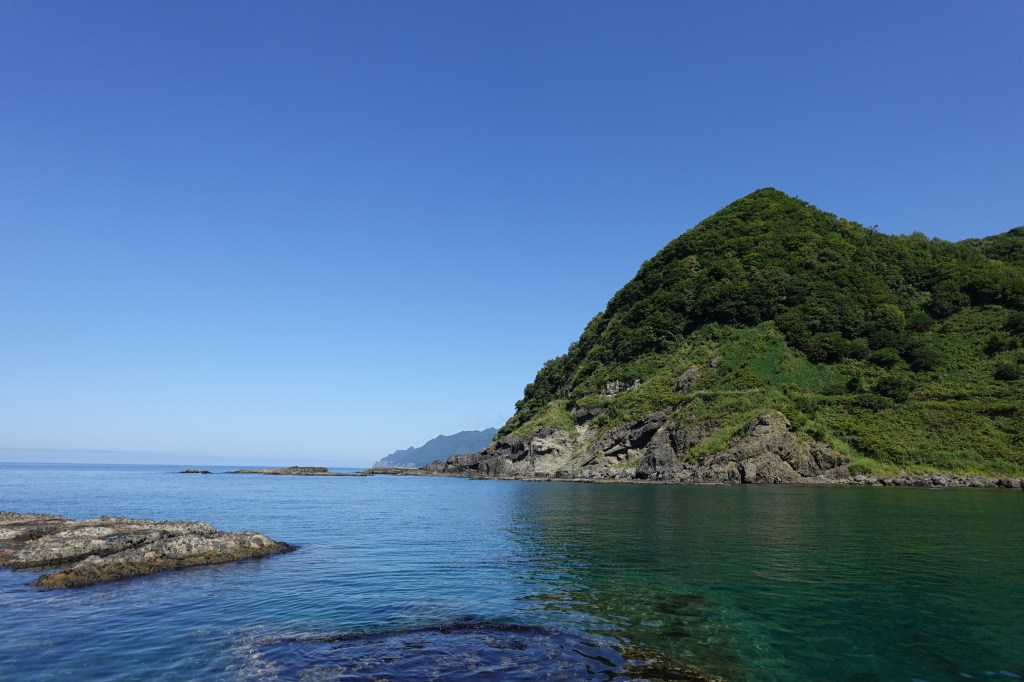
Perhaps that is why eating it near Furubira affected me so differently. We had spent the morning driving past fishing boats, small harbours and the intensely blue water of the Shakotan coast. Our guide had spent hours explaining Hokkaido through the things people grew, caught and ate rather than through famous landmarks. By lunch, the uni wasn’t arriving as an isolated luxury object. It belonged to everything we had just driven through.
I could taste it with context.
And context, it turns out, is a remarkably effective seasoning.
So why do we keep eating uni?
There is an obvious answer: because very good uni is delicious.
I now know that.
But if deliciousness were the only reason humans sought expensive and inconvenient foods, our culinary lives would be considerably simpler. We travel for wine when perfectly good bottles exist at home; we wait for truffle season, argue about the provenance of oysters, remember a particular peach years after eating it and spend irrational amounts of money pursuing versions of ingredients that are, technically, available elsewhere.
Part of what we’re buying is taste, but part of what we’re pursuing is specificity.
The pleasure of knowing that this could only quite taste this way here, at this moment, because an animal lived in this water, ate what grew beneath it and was harvested during this brief part of the year.
That knowledge doesn’t make the food taste better in any measurable chemical sense, yet I am convinced it changes the experience of tasting it.
Before Hokkaido, I saw uni presented like treasure and assumed that perhaps the ceremony was doing some of the work. After Hokkaido, I find myself thinking almost the opposite. The most luxurious uni I had ever eaten arrived without ceremony at all, in a local restaurant in Furubira, surrounded by people who did not appear to find its existence particularly remarkable.
Perhaps that is why I remember it so clearly.
I don’t want to eat uni now simply because I finally understand an expensive food, or because appreciating it admits me into some imaginary club of sophisticated eaters. If anything, becoming more particular about it means I will probably eat less of it. I would rather wait for the right season, the right place and the version that has something to tell me about where it came from.
Because the pleasure I remember from Hokkaido wasn’t merely the softness, the sweetness or that extraordinary lingering umami.
It was the feeling that, for the length of a bite, I understood something about the place I was in that I hadn’t understood a moment earlier.
And perhaps that is the kind of luxury worth continuing to look for.


Leave a comment