There are certain things about pregnancy that seem to invite an almost unreasonable degree of preparation. We research the safest foods, compare prenatal vitamins, reconsider our exercise routines and scrutinize ingredients that previously occupied very little of our attention. Somewhere along the way, many of us also acquire an impressive collection of creams and oils promising to preserve the skin as our bodies change.
I was no exception.
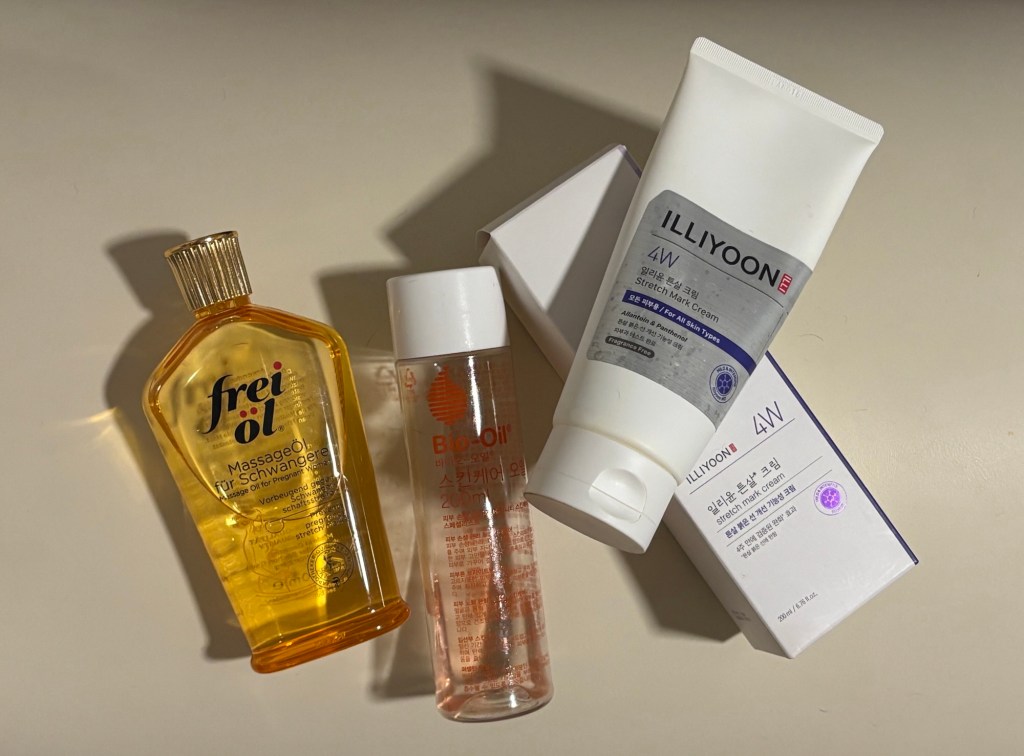
From the moment I discovered I was pregnant, I began applying generous amounts of moisturizer and body oil twice a day. My routine included Illiyoon and Biotherm stretch-mark lotions alongside Bio-Oil, and I continued it throughout pregnancy and for approximately a year after giving birth. Thanks to this consistent routine, I made it through pregnancy without a single stretch mark.
It was one of the simplest commitments I made during those months. Unlike the many aspects of pregnancy that were beyond my control, moisturizing was something I could do consistently, without much thought, every morning and evening.
But looking back, I have become interested in a more complicated question: Did those products actually help prevent stretch marks, or did I simply participate in one of pregnancy’s most convincing beauty rituals?
The scientific answer is that there is currently no strong evidence that ordinary stretch-mark creams or oils reliably prevent stretch marks during pregnancy. Moisturizers can improve skin comfort and hydration, but preventing the deeper structural changes responsible for stretch marks is another matter entirely.
That distinction is worth understanding before spending a considerable amount of money on products marketed specifically to pregnant women.
What actually causes pregnancy stretch marks?
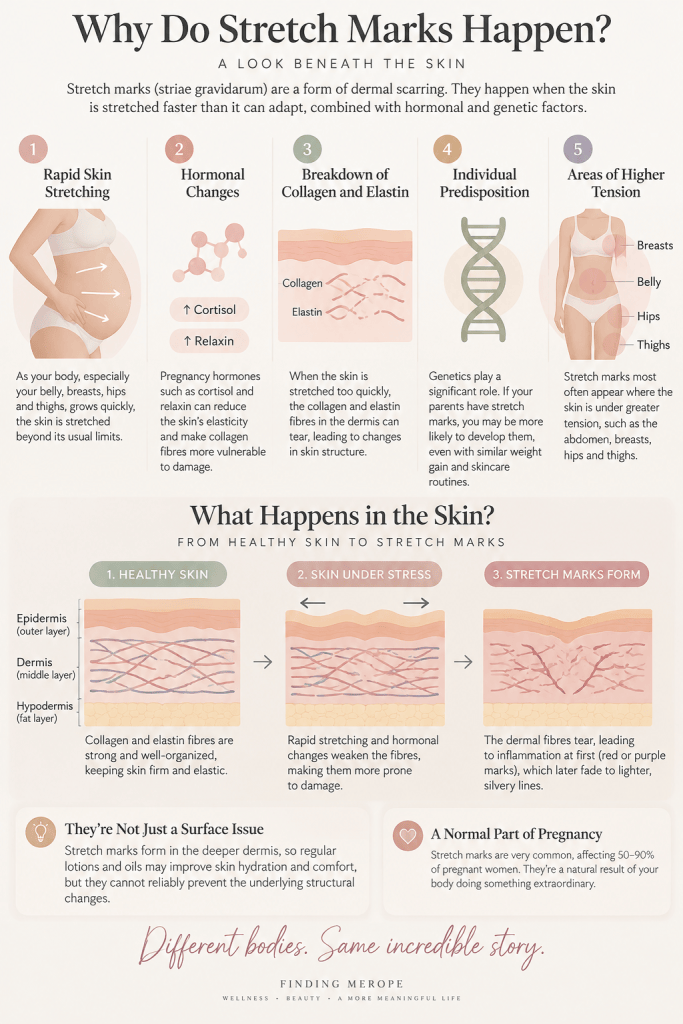
Stretch marks, medically known as striae gravidarum when they develop during pregnancy, are not simply the result of dry skin being stretched too far. They are a form of dermal scarring associated with changes in the collagen and elastin that support the skin, influenced by rapid physical expansion, hormonal changes and individual susceptibility.
The abdomen is the most obvious area, but stretch marks can also appear on the breasts, hips and thighs. Initially, they may be pink, red, purple or darker depending on skin tone, gradually fading into paler lines over time.
What makes them difficult to prevent is that the relevant changes occur deeper in the skin than the surface layers where conventional moisturizers primarily work.
What does the research say about stretch mark creams?
The most useful place to begin is a Cochrane systematic review examining topical preparations intended to prevent stretch marks during pregnancy.
The review included six trials involving 800 women and evaluated preparations containing ingredients such as cocoa butter, olive oil, vitamin E and other formulations. Researchers did not find convincing evidence that these topical treatments prevented stretch marks compared with placebo or no treatment.
That does not mean every cream is necessarily ineffective. Rather, the available trials have been too limited and inconsistent to establish reliable preventive benefits.
It is an important distinction because beauty marketing often turns the absence of certainty into an opportunity for exaggerated promises. A product may improve how skin feels without demonstrating that it can prevent structural changes within the dermis.
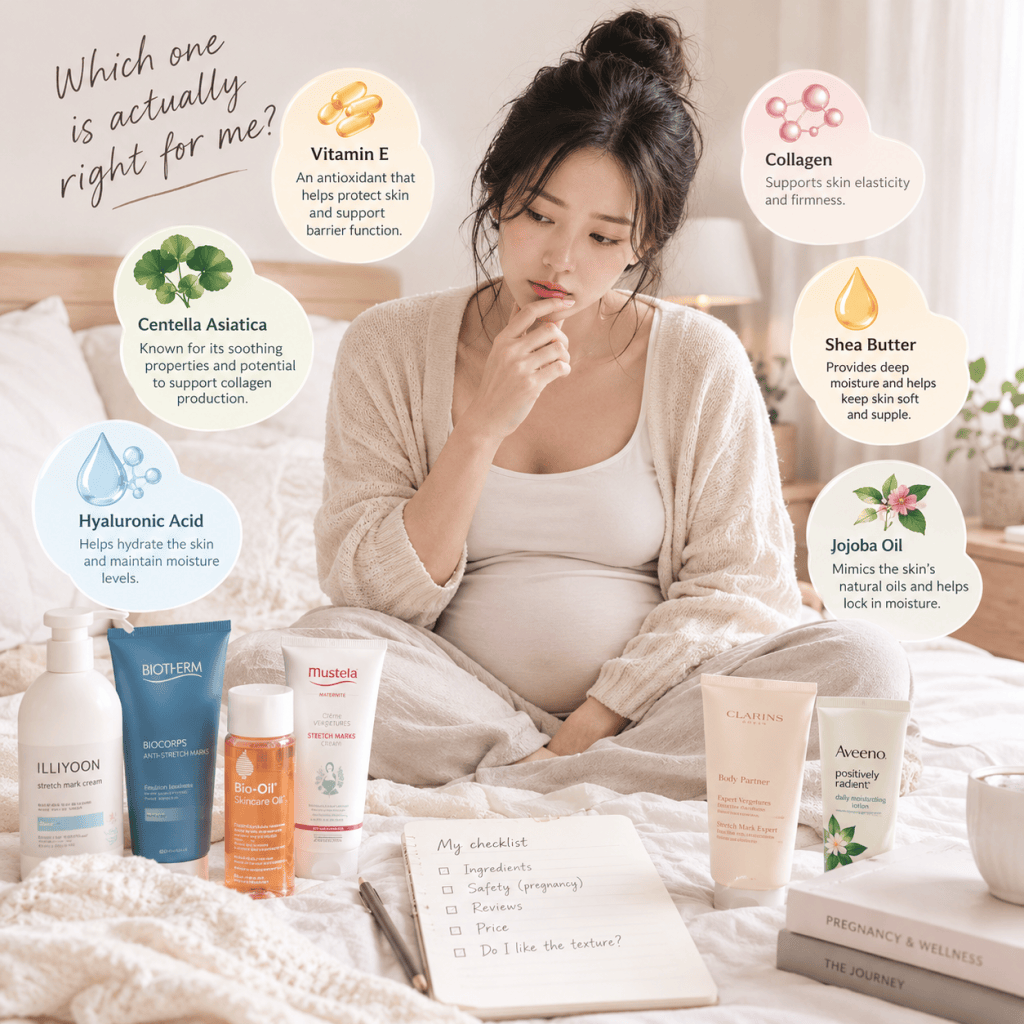
There has also been some interest in ingredients such as centella asiatica and hyaluronic acid. Smaller studies have suggested potential benefits, particularly for early stretch marks, but the evidence is not strong enough to establish these ingredients as dependable preventive treatments.
My routine: Illiyoon, Biotherm and Bio-Oil
My own approach was not particularly scientific. I used products I found pleasant and easy to incorporate into my day, applying lotion generously and following with oil when I wanted additional softness.
Illiyoon appealed to me because of its straightforward approach to moisturizing, while Biotherm felt more like a traditional body-care indulgence. Bio-Oil became part of the routine largely because it was already so closely associated with pregnancy skincare.
I maintained this routine from early pregnancy until roughly a year postpartum, long after the immediate stretching of pregnancy had ended.
What I can say confidently is that the ritual made caring for my changing body feel more intentional. What I cannot establish is how much, if at all, the products altered my likelihood of developing stretch marks.
There was no untreated comparison, and my skin’s natural characteristics, genetics and hormonal changes were not things I could measure or control.
This is where personal experience becomes useful but also limited. I can describe what I did, how consistently I did it and whether I enjoyed the products. I cannot reasonably turn that experience into a claim of clinical effectiveness.
Is Bio-Oil better than an ordinary moisturizer?
The attraction of a specialized pregnancy oil is understandable. Its positioning suggests that it is doing something more targeted than an everyday body lotion, even when the primary visible benefit may be softer, better-conditioned skin.
Oils and moisturizers work somewhat differently. A moisturizer may combine humectants, which attract water, with emollients and occlusives that soften skin and reduce moisture loss. An oil can complement that process by helping reduce water loss and leaving a smoother surface.
Neither mechanism, by itself, demonstrates an ability to prevent stretch marks.
For someone choosing between an expensive stretch-mark oil and a well-formulated, comfortable body moisturizer, I would therefore place greater importance on tolerability, texture, fragrance preference and the likelihood of using the product consistently than on promises of preventing stretch marks.
A dedicated oil can be a lovely addition to a routine, but it should be considered an optional body-care product rather than a proven preventive treatment.
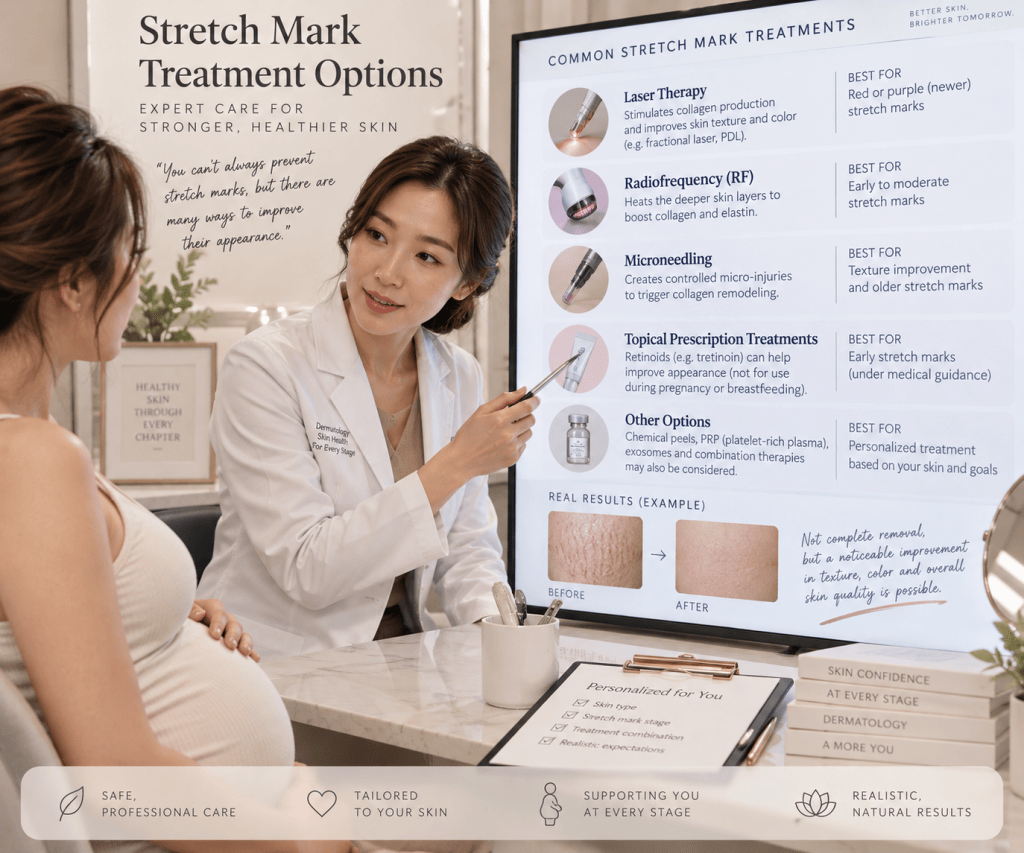
What about treating stretch marks after pregnancy?
Prevention and treatment are separate questions, and this is where the conversation becomes more interesting.
Once stretch marks have appeared, particularly while they are relatively new, certain topical ingredients and professional treatments may help improve their appearance. The American Academy of Dermatology discusses evidence for hyaluronic acid and prescription tretinoin in early stretch marks, as well as procedures including laser and radiofrequency treatments.
However, the results vary, complete removal is not generally realistic, and some treatments are inappropriate during pregnancy or require additional consideration while breastfeeding. Retinoids in particular should not be used during pregnancy.
It is also worth remembering that stretch marks naturally become less conspicuous with time, making it difficult to distinguish treatment effects from the skin’s own gradual changes without controlled evidence.
For someone considering professional treatment postpartum, the more useful questions may be how old the marks are, what degree of improvement is realistic, and whether the potential benefit justifies the cost and recovery involved.
Would I do the same thing again?
Probably, although I would approach it with a different understanding.
I would still moisturize regularly during pregnancy, partly because keeping the skin comfortable is worthwhile in itself and partly because I enjoyed having a small daily ritual that belonged entirely to me. I would not, however, assume that using more expensive products or applying them with greater discipline would guarantee a different outcome.
Pregnancy involves an extraordinary amount of physical change, and it is tempting to believe that every change can be anticipated and managed with sufficient preparation. The beauty industry has become particularly skilled at appealing to that instinct.
Yet some of the most significant changes to our bodies are not necessarily problems waiting for the correct product.
If there is one lesson I would take from my own experience, it is that skincare can be valuable without being transformative. A moisturizer does not have to prevent stretch marks to be worth using, but we should understand what we are paying for.
And perhaps, especially during pregnancy, there is something liberating about recognizing the difference between caring for our bodies and attempting to control them.
Editor’s note: This article combines personal experience with published dermatological research. My skincare routine is an individual account, not evidence that the products prevented stretch marks. The scientific discussion is educational and does not replace personalized medical advice.


Leave a comment